
Key takeaways
- Very few estate sales sell everything. Large furniture and packed basements are usually still there when the doors close.
- Leftovers get sorted before anything is hauled. Items with value go to resale vendors, and usable goods are donated with receipts back to the family.
- Hazardous items need separate handling. Paint, chemicals, propane tanks, and old fuel get set aside for safe local disposal.
- Planning the sale and the estate sale cleanout together means one team takes the house from cluttered to broom-clean.
After an estate sale, the leftovers still have somewhere to go. An estate sale cleanout sends items with value to resale vendors, donates what’s still usable, sets hazardous materials aside, and recycles or hauls away the rest, leaving the house empty and broom-clean.
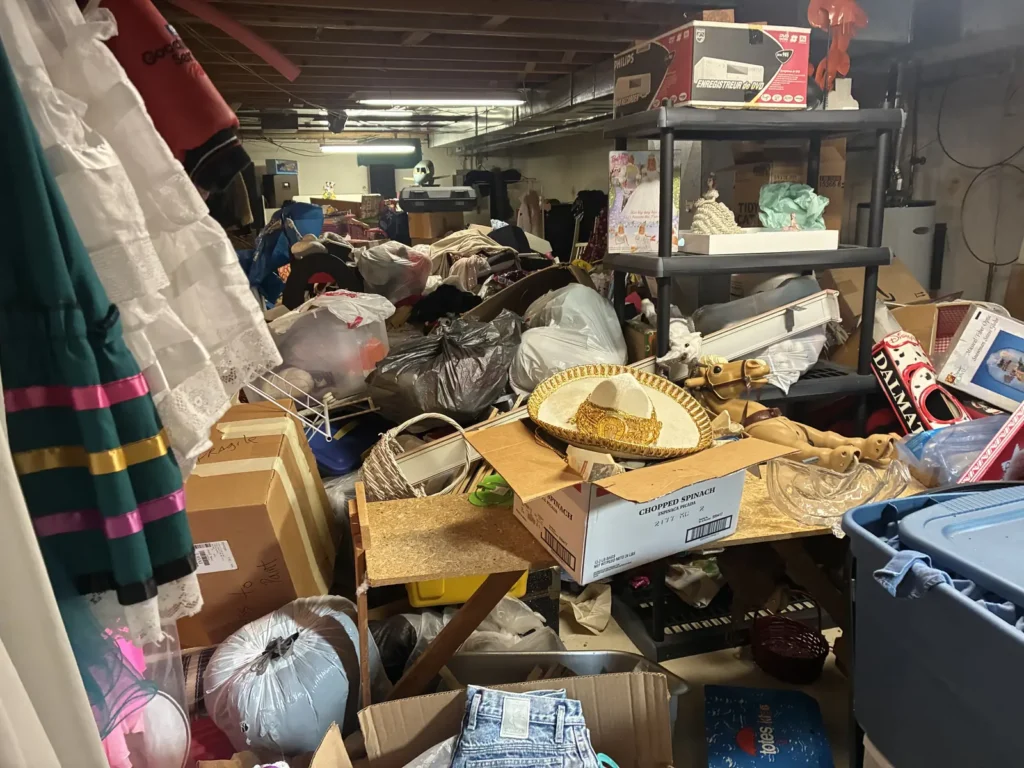
Even a busy sale rarely sells everything. Big furniture, worn household goods, half-full basements, and the odds and ends of a garage are almost always still there when the doors close. For families and executors, that’s often when the job starts to feel overwhelming again.
Why there’s always something left
Buyers at estate sales are looking for furniture, tools, collectibles, and things they can use or resell. They’re not looking for the boxes of paperwork in the basement, the worn mattress, or the shelf of mismatched dishes.
Large pieces may be too big for a buyer to move. And some rooms, like a packed basement or garage, never get fully opened up for the sale at all.
Where estate sale leftovers go
Every leftover item ends up in one of six places.
| Leftover | Where it goes | Notes |
|---|---|---|
| Photos, letters, documents, and personal items | Back to the family | Set aside before any load goes to the truck |
| Furniture, antiques, tools, jewelry, and collectibles with value | Our trusted vendor network | Recovered value can help offset the cleanout cost |
| Clothing, kitchenware, linens, and household goods in good shape | Donation | Receipts come back to the family |
| Appliances, pianos, and exercise equipment | Removed with the rest of the contents | No separate hauler needed |
| Broken furniture, carpet, and general debris | Recycled where possible, otherwise hauled away | Landfill is the last stop |
| Paint, chemicals, solvents, propane tanks, and old fuel | Set aside for safe local disposal | Never mixed in with a regular load |
How an estate sale cleanout works
Take one last look for keepsakes
Before the remaining contents go anywhere, the family should walk through once more. Photos, letters, documents, and small personal items have a way of surfacing after a sale, especially in drawers and closets that were cleared quickly.
When our crew handles the cleanout, anything personal we find gets set aside before a load goes to the truck. If the house belonged to a parent, our guide to cleaning out a parent’s house lists the papers worth finding first.
Sell what still has value
What didn’t sell isn’t always worthless. Furniture, antiques, tools, jewelry, and collectibles that still hold real value go to our trusted vendor network, and tools and workshop contents in particular are exactly what those vendors want.
Recovered value can help offset the cost of the cleanout. Our before-and-after gallery shows a workshop our crew sorted, with the tools set aside for the owner and the rest hauled off.
Donate what’s still usable
Clothing, kitchenware, linens, and household goods in good shape should go to people who can use them. Our order is donation first, recycling second, landfill last, and the donation receipts come back to the family.
At one recent estate sale, both parents had been pillars of the local art community. The sale brought in over $9,000, but a couple of kilns didn’t sell. With the family’s approval, we worked with their son and the director of the Adrian Center of the Arts to donate the equipment and art supplies to local colleges, so it went to educational use instead of the landfill.
Nationally, most discarded furniture ends up in a landfill, according to the EPA’s furniture and furnishings data:
80%
Share of the furniture and furnishings Americans threw out in 2018 that went to landfills. Most of the rest, 19.5 percent, was burned for energy recovery.
Source: U.S. EPA, Durable Goods: Product-Specific Data (2018 figures)
Set aside hazardous items, then clear the rest
Paint, chemicals, solvents, propane tanks, and old fuel need different handling. The EPA’s guidance on household hazardous waste warns that products like these can pollute the environment when they’re poured down a drain or, in some cases, put out with the regular trash.
We set them aside and help coordinate safe local disposal. Then everything else gets removed, including appliances, broken furniture, carpet, and general debris.
The job isn’t done until the property is empty and broom-clean, the same finish as our estate cleanouts. If the estate needs a record, before-and-after photos and a completion summary are available for executors, attorneys, and probate files.
That sorting is what separates a cleanout from a haul-away, and our guide to whole-house cleanouts and junk removal compares the two side by side.
Plan the sale and the cleanout together
The easiest way to avoid the post-sale scramble is to plan both at once. Our estate sale service treats the sale and the cleanout as one connected job, run by the same team from the first walkthrough to the final sweep.
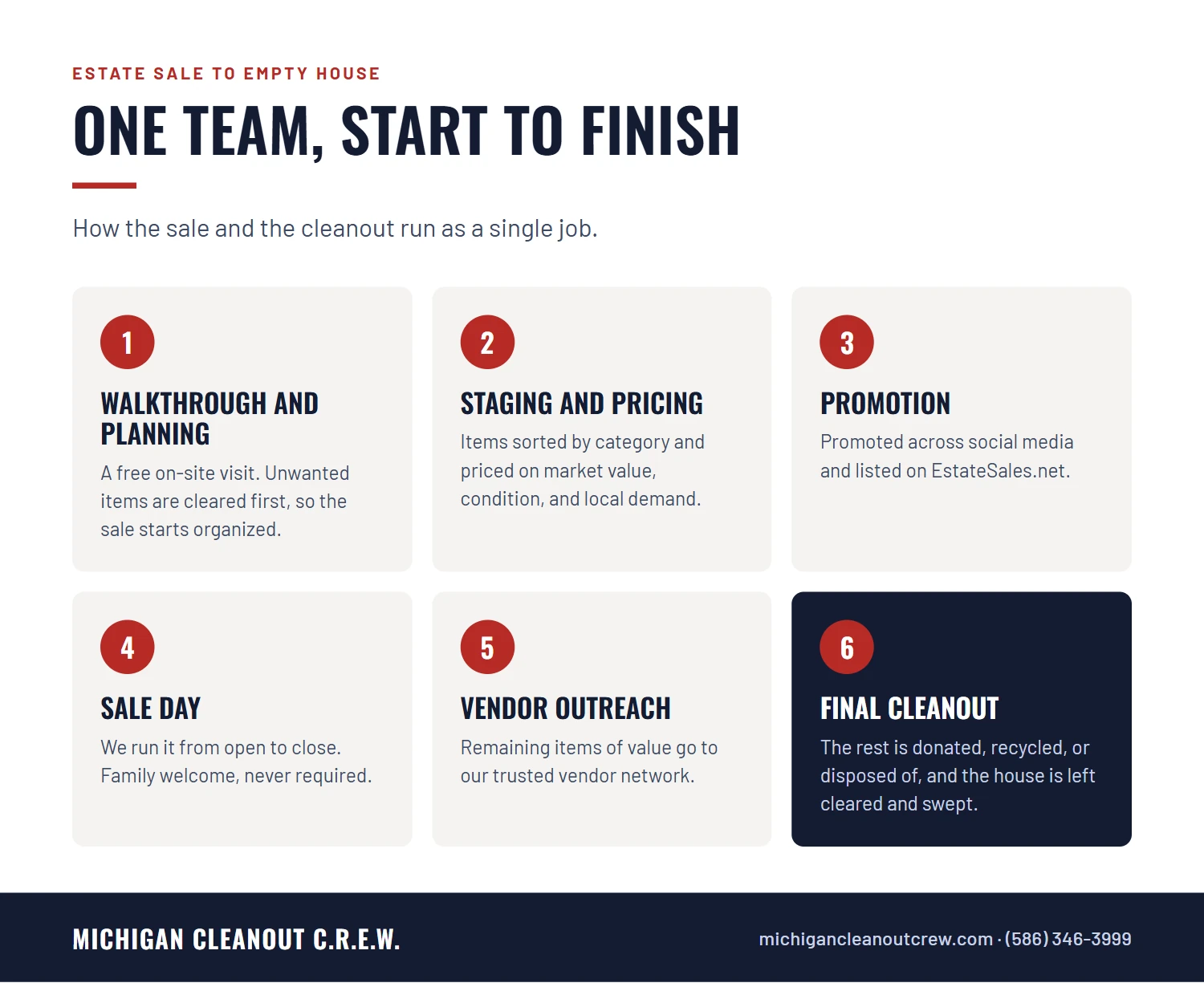
Every item is priced on current market value, condition, and local demand, and the sale is promoted on social media and listed on EstateSales.net. Family members are welcome on sale day but never required.
Already had the sale with another company? We can still come in afterward and finish the job. If the house is headed for a listing, we’ll work backward from the photo date, the same way we handle market-ready home prep.
Estate sale cleanout FAQ
Who cleans up after an estate sale?
That depends on who ran the sale. Some companies leave the leftovers for the family, so ask before you sign. When we run the sale, the final cleanout is part of the plan from the start.
How soon after the sale can the house be cleared?
Walkthroughs usually happen within a few days of your call, and most projects start within the week after you approve the quote. If you’re working toward a closing or listing date, mention it when you request a walkthrough, because those get priority.
Does the family need to be there for the cleanout?
No. We can work from a lockbox code and send photo updates, which helps when the executor lives out of state.
Do you give receipts for donated items?
Yes. Usable goods are donated and the receipts come back to you, which is worth keeping with the estate’s paperwork.
Get a free on-site walkthrough
Tell us a little about the property and we’ll set up a free on-site walkthrough. No pressure, no obligation, and a clear flat-rate quote.