
Key takeaways
- Plan a real estate cleanout backward from two dates. Clutter and spare furniture go before the listing photos, and staging pieces can wait until closing.
- Keep a few good pieces for staging, mostly in the living room and primary bedroom, and clear the rest so every room shows at its real size.
- Give the inspector a clear path. The electrical panel, furnace, water heater, and attic hatch need open space around them, because inspectors don’t have to move your things to reach them.
- Set aside paperwork and keys first. Garage remotes, warranties, repair records, and anything the buyer negotiated to keep never belong in a junk load.
A real estate cleanout clears a house so it can be photographed, shown, inspected, and handed to a buyer. It runs on two deadlines. Clutter and spare furniture have to be gone before the listing photos, and the staging pieces and last odds and ends go before closing, so the buyer walks into an empty, broom-clean house.
Often the sellers have already moved out, the closing clock is running, and the house is still full. Or an estate has settled, and an inherited house has sat for months because nobody wants to face what’s inside. Either way, what goes first matters, because the photographer shows up long before the buyer does.
Work backward from the photo date and the closing
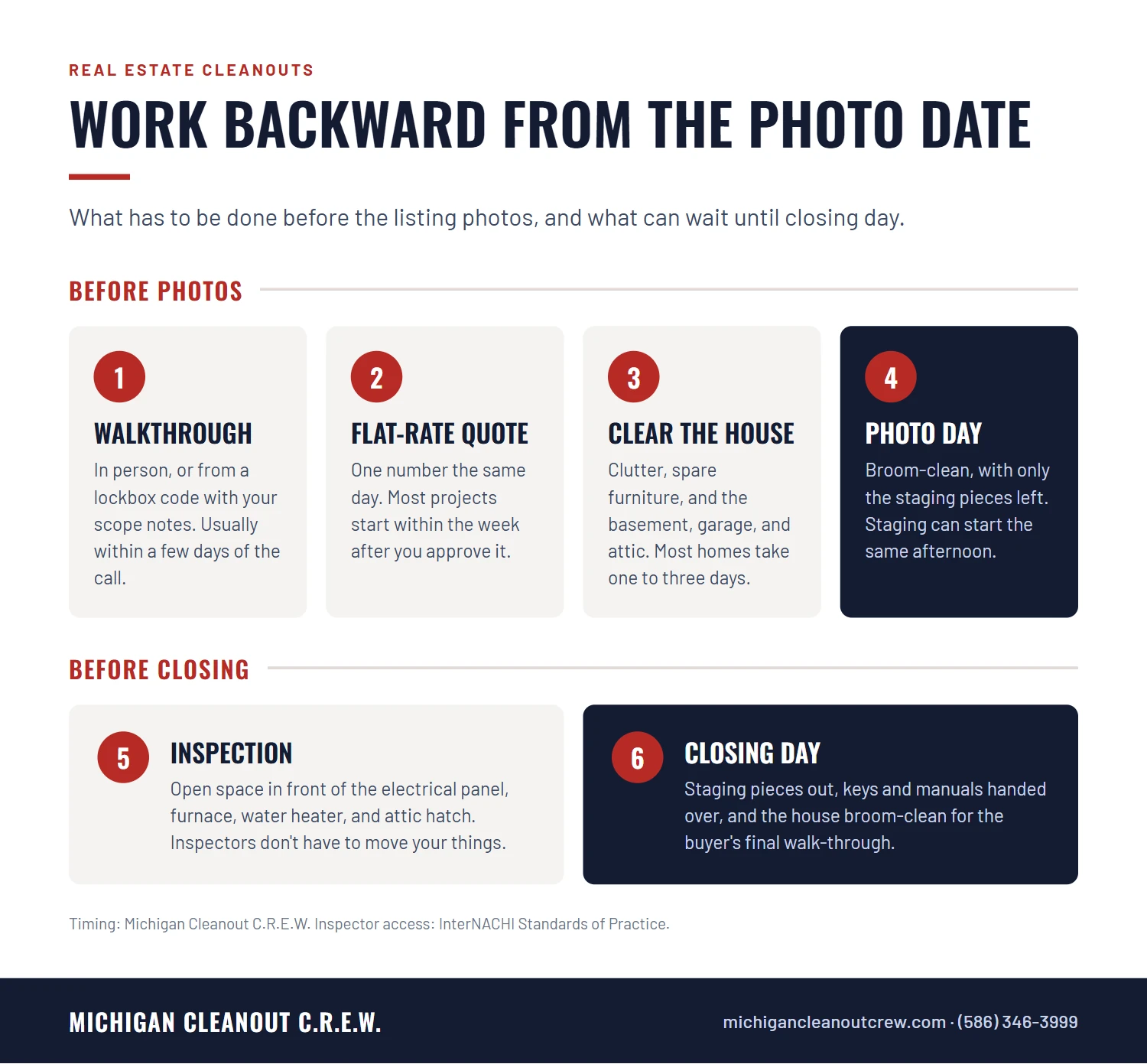
A listing has two hard deadlines for what’s inside the house. The first is photo day, because those pictures follow the listing for as long as it’s live. The second is closing, when the buyer expects an empty house at the final walk-through.
In between comes the inspection, on a schedule set by the purchase agreement and usually soon after the offer is accepted. Anything that blocks the inspector’s view of the house has to be gone by then.
With our crew, a walkthrough usually happens within a few days of your call, and most projects begin within the week after you approve the quote. Most homes take one to three days to clear, so count back from your photo date with those numbers and leave a cushion for Michigan weather and for decisions the family hasn’t made yet.
The real estate cleanout checklist: before photos vs. before closing
Here’s how the contents of a typical house split between the two deadlines. Walk the house with it before the crew arrives, with the sellers or the family if you can.
| What | By photo day | By closing |
|---|---|---|
| Counter clutter, fridge magnets, and bathroom products | Gone or boxed | Gone |
| Family photos, collections, and anything personal on display | Packed away | Gone with the family |
| Furniture you won’t use for staging | Gone | Gone |
| A few good pieces kept for staging | In place and styled | Out before the final walk-through |
| Basement, garage, attic, and shed contents | Cleared | Cleared and swept |
| Boxes or shelving in front of the panel, furnace, water heater, or attic hatch | Cleared | Still clear for the walk-through |
| Paint, chemicals, propane, and old fuel | Set aside, out of sight | Gone through safe disposal |
| Appliances and fixtures named in the purchase agreement | Left in place | Stay with the house |
| Keys, garage remotes, manuals, and warranties | Gathered in one box | Handed to your agent for the buyer |
| Deeds, tax records, and estate papers | Pulled out first | Kept by the seller or the estate |
The bottom rows are where things go wrong. It’s easy for a washer the buyer negotiated for, or the only garage door remote, to leave in the same load as the junk.
What to keep for staging, and what to clear
In the National Association of Realtors’ 2025 staging survey, decluttering topped the list of things agents tell sellers to do:
91%
Share of agents who told home sellers to declutter, the most common recommendation in the survey. Cleaning the entire home came next at 88 percent.
Source: National Association of Realtors, 2025 Profile of Home Staging
Some furniture should stay for the photos, though. The same survey found buyers’ agents rank the living room as the most important room to stage (37 percent), followed by the primary bedroom (34 percent) and the kitchen (23 percent).
So a clean sofa and side table, a made bed in the primary bedroom, and a kitchen table with two chairs often earn their spot until closing. The guest bedroom scored lowest at 7 percent, which makes it an easy room to clear completely.
Before the cleanout, decide with your agent which pieces stay, and mark them with painter’s tape so there’s no question on the day. Everything else, from the extra recliner to the junk drawer, can go room by room so the house shows at its actual size.
Clear the spaces buyers and inspectors open
Basements, garages, and attics are the spaces that kill deals and inspections. A packed basement makes buyers wonder what the boxes are hiding, whether that’s a water stain, a crack in the wall, or nothing at all.
Home inspectors don’t have to dig through them. The InterNACHI home inspection Standards of Practice say an inspector isn’t required to move furniture, personal items, or other obstructions, and a component only counts as readily accessible if it can be seen without removing obstacles.
So if shelving blocks the electrical panel, the report may list the panel as not inspected, which can mean a second visit or a nervous buyer. Before inspection day, give these open space:
- The electrical panel, with open floor in front of it
- The furnace, the water heater, and any water softener
- The attic hatch or pull-down stairs, plus the floor below them
- The sump pump and the basement walls, where water would show
- The crawl space entrance, if the house has one
- The cabinets under the kitchen and bathroom sinks
On one of our jobs, we cleared a workshop wall down to bare shelves so it was ready for the home inspection. We empty basements, garages, and attics completely, heavy stuff included.
What not to toss before you sell
Paperwork comes out first, before anyone fills a single bag. Michigan’s Seller Disclosure Act requires a disclosure statement before the buyer signs a binding purchase agreement, and the form asks for things like the approximate age of the roof and heating system and whether there’s been evidence of water in the basement.
Repair receipts, old inspection reports, and warranty cards answer those questions, so keep them. If you’re selling as the personal representative of an estate, ask the estate’s attorney whether the form applies to you. The act exempts some transfers by a fiduciary who doesn’t live in the house while administering a decedent’s estate.
Things the buyer is counting on
The disclosure form itself notes that the appliances it lists come with the house only if the purchase agreement says so. Read the agreement before the cleanout, and tell the crew in writing what stays, whether that’s the washer and dryer, the garage fridge, the shed, or the swing set out back.
Small things that vanish into junk loads
Gather these into one labeled box before anything else leaves the house:
- Every house key, plus mailbox and shed keys
- Garage door remotes and keypad codes
- Manuals and warranties for the furnace, water heater, roof, and appliances
- Receipts for big repairs, like a new roof or a replaced sump pump
- Leftover flooring, tile, or shingles that match the house
- Deeds, tax bills, and estate papers, which stay with the seller or the estate
For families clearing a parent’s home, our guide to cleaning out a parent’s house after a death lists the documents to look for first. On an estate cleanout, our crew sets aside keepsakes, photos, and documents before a single item is removed, with the family making every call.
Donating and disposing of what’s left
Once the keepers and the staging pieces are marked, everything else gets sorted. Our order is donation first, recycling second, landfill last. Usable goods are donated, items with real value are flagged for the seller, and the donation receipts come back to you.
Dump fees are billed at cost, and anything that sells or gets donated lowers the bill. If the house is full of furniture, tools, or collectibles, an estate sale may be worth running before the listing.
Our estate sale service handles that for realtors whose clients need contents sold before listing, and it ends with a full cleanout. Whatever doesn’t sell goes through an estate sale cleanout, sorted for resale and donation before anything is hauled.
A few things can’t go in a regular load at all. Paint, chemicals, solvents, propane tanks, fuel, and firearms get set aside, and we help coordinate safe local disposal. Bring it up early, since local drop-off days don’t always line up with a closing date.
Real estate cleanout services for agents and sellers
Agents send us a lockbox code and a scope, and we send back photos of an empty, broom-clean property, so nobody has to drive out between appointments. Out-of-state heirs get the same setup, with photo updates at every decision point.
The flat-rate quote comes the same day as the walkthrough, and it’s one number that’s easy to pass through on a closing statement or an invoice to the estate. Every market-ready cleanout ends swept and presentable, so photos or showings can happen right away, and staging can start the same afternoon.
We clear houses, condos, basements, garages, and rental units across Macomb, Oakland, and Wayne counties. Michigan Cleanout C.R.E.W. is licensed, certified, and insured in the State of Michigan.
Real estate cleanout questions
How far ahead of the listing photos should we book?
Call as soon as you know the photo date, even if the family hasn’t finished deciding what to keep. Listing deadlines get priority on the schedule, and most homes take one to three days once the work starts.
What does a real estate cleanout cost?
It’s one flat-rate quote after a free walkthrough, based on volume and access, and the quote is the price. For scale, a full estate cleanout with our crew typically runs $1,500 to $3,500 or more, and junk removal jobs run $125 to $600 or more.
Not sure which one your listing needs? Our guide to whole-house cleanouts versus junk removal lays out the difference.
Can you clear only the basement or garage?
Yes. Basements, garages, single rooms, and tenant leave-behinds are all common, and the walkthrough defines the scope. Garages and single rooms are often done the same day.
What if the buyer wants some of the furniture?
Get it in writing first, in the purchase agreement or a signed list. Then mark those pieces before the cleanout starts so they stay put when everything around them goes.
Get a free on-site walkthrough
Tell us a little about the property and we’ll set up a free on-site walkthrough. No pressure, no obligation, and a clear flat-rate quote.